
Virtual Banking, Real Presence: Creating Hybrid Experience
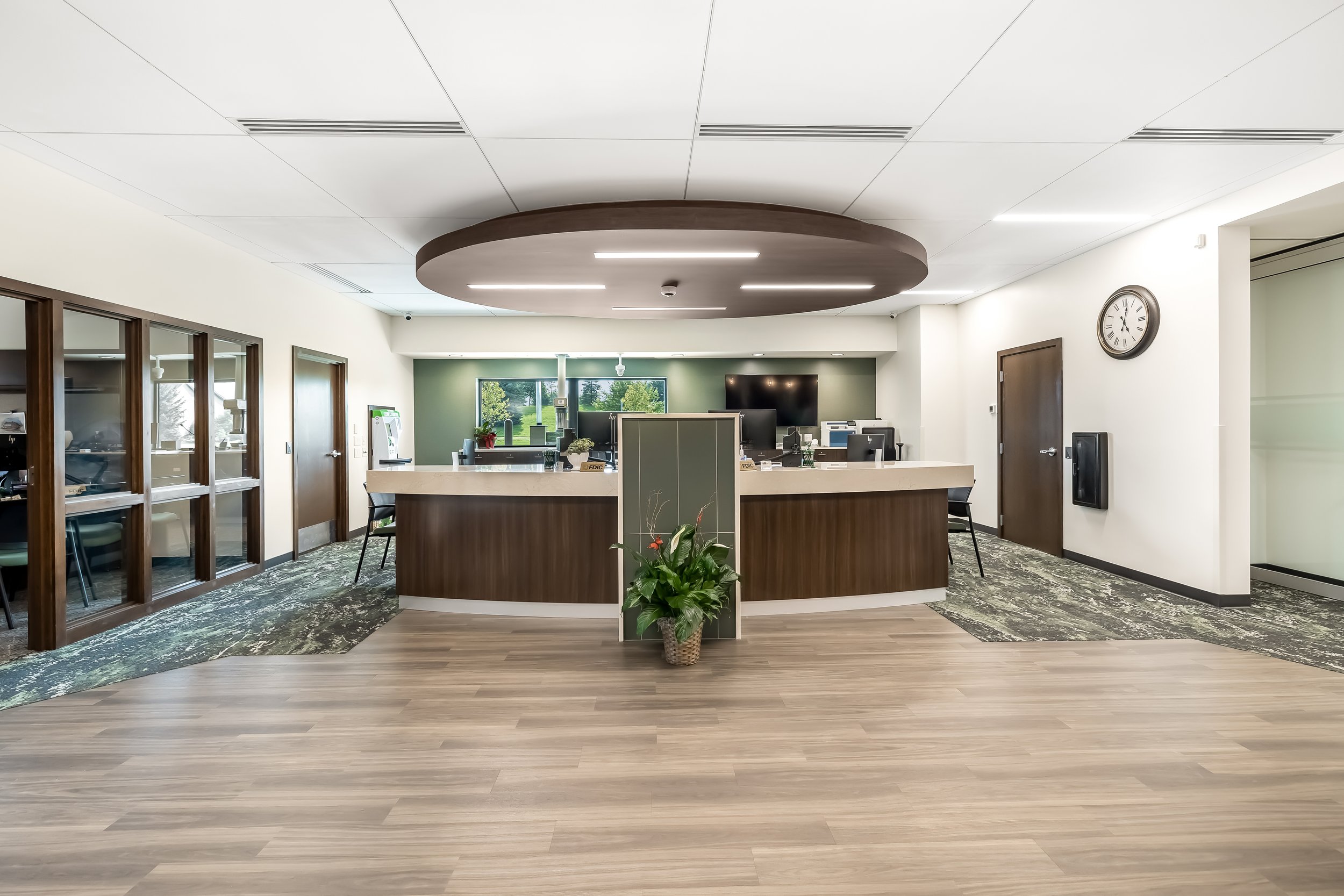
For years, the prediction was simple: digital banking would grow and branches would fade. Half of that came true. Digital banking has grown dramatically. But the branch didn't fade. It changed. And the institutions winning right now are the ones designing their physical spaces to work with their digital channels instead of competing against them.
The Real Pressure: Deposits
Talk to financial leaders today, and the conversation comes back to one word: deposits.
Our clients are watching money flow into digital wallets and app-based accounts, where it often just sits. The people parking funds there typically aren't earning interest or receiving meaningful benefits.
Meanwhile, the institutions losing those deposits feel it directly, because the equation hasn't changed in a hundred years. If a bank doesn't have deposits, it can't make loans. The industry is concerned enough that legislative efforts are underway to address the impact these digital deposit channels are having on traditional financial institutions and to steer things back toward something simpler.
You can't fix that problem with an app alone. You fix it by giving people a reason to bring their financial life back to an institution they can see, walk into and trust. That's as much a design problem as a banking problem.
The Branch Has a New Job
The biggest shift we see in financial design is this: transactions are no longer the focal point.
The routine deposit and withdrawal traffic that branches were once built around has moved to phones, and that's fine. What's left is more valuable. Today's branch is built around relationships. In practice, that means:
Smaller footprints. When you're not staffing a long teller line for transaction volume, the building can shrink.
Comfortable, hospitality-driven space. Soft seating, natural light and conversation areas replace the fortress lobby. People should want to linger, not get in and out.
More amenities. Coffee, community rooms, technology bars and shared spaces give people reasons to visit that have nothing to do with a transaction.
Co-branding. Pairing the branch with a complementary business, which deserves its own discussion below.
People Are Coming Back to People
Here's the part of the story that surprises many executives: the swing back toward human interaction is real.
COVID forced technology adoption faster than anyone planned, and the market is now correcting. People don't want to talk to a robot about a mortgage. We're seeing customers in their thirties and beyond returning to in-person banking, and it makes sense. That's the stage of life where banking gets complicated.
There's an economic side to this, too. Branch technology has become extraordinarily expensive, and many institutions are finding they can't justify the cost of the latest machines. But they can afford the people who actually help clients. For a community institution, a knowledgeable human being is both cheaper and more effective than the robot intended to replace them.
The hybrid model isn't about maximum technology. It's about putting digital tools where they do routine work well and putting people where relationships are built.
Co-Branding: The Branch You Don't Notice
If the branch's new job is relationships, co-branding is one of the most powerful tools for the job.
The idea is simple. Pair the financial institution with a complementary business, most often a coffee shop, under one roof. The magic is in the psychology: you don't feel like you're at a bank.
You're there because you have a coffee habit. Banking just happens to be ten feet away.
That changes everything about the visit. Walking into a financial institution carries stress and pressure for a lot of people. Walking into a coffee shop doesn't. Co-branding removes the intimidation factor, builds daily foot traffic and creates a genuine community gathering place where the institution is simply part of the neighborhood routine. We've watched this work firsthand.
It also supports digital adoption in a way that surprises people. When a customer is in the building anyway, relaxed and unhurried, that's the perfect moment for staff to walk them through the app, set up mobile deposit or answer the question they'd never call about. The physical space becomes the on-ramp to the digital service.
Designing for Two Brands Under One Roof
The most common question we get about co-branding is how two businesses share a building without blurring into each other. A few principles guide our approach:
Use signage deliberately. Clear, well-placed signage lets each brand hold its own identity while signaling that the two belong together.
Define zones, then blend them. Walls and architectural elements can separate the spaces where separation matters, but in our experience, the more blended the environment, the better it performs. You want people to associate the two brands with each other.
Choose the partner carefully. This is the variable that matters most. The better the partnership, the better the outcome for both businesses. A true co-brand isn't a landlord-tenant arrangement with separate spaces and separate identities. It's a genuine partnership working toward the same goal: a one-stop destination people build into their day.
The Hybrid Branch Is the Strategy
Digital banking isn't the enemy of the branch. A poorly designed branch is the enemy of the branch. The institutions holding onto deposits in this environment are the ones whose physical presence gives people something digital can't: a comfortable place, a familiar face and a reason to walk in the door that doesn't feel like a chore.
That's what hybrid really means. Not half digital and half physical, but a physical experience designed so that the digital tools and the human relationships make each other stronger.
